












A Complete Buyer Guide to Restaurant Oil Filtration Equipment for Restaurants
Investing in the right oil filtration equipment is crucial for any restaurant aiming to maintain high standards of food quality while optimizing operational efficiency. Oil filtration systems are essential for extending the lifespan of cooking oil, ensuring consistent food taste, and reducing costs associated with frequent oil changes. This guide will navigate you through key considerations when purchasing restaurant oil filtration equipment.
Firstly, understand your specific needs based on kitchen size and frying volume. Restaurants with high frying demands may require robust systems capable of handling large quantities of oil efficiently. Consider units that offer quick filtration cycles without compromising the quality of the filtered oil. For smaller establishments or those with less frequent frying needs, compact models might suffice, providing cost-effective solutions without excessive capacity.
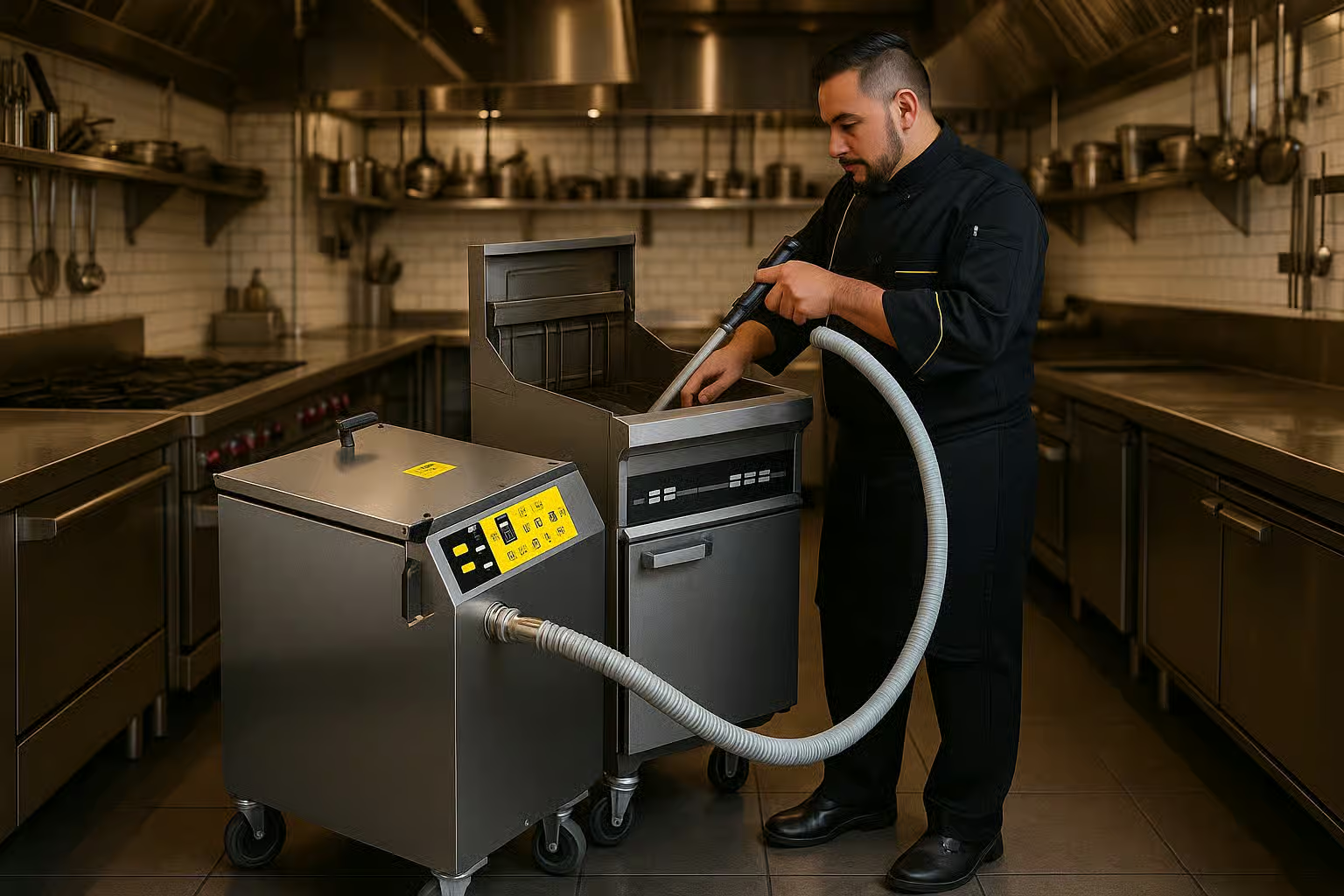
Next, evaluate the type of filtration system that best suits your operations: portable or built-in units. Portable units are versatile and can be moved between fryers as needed, offering flexibility in kitchens where space is at a premium or multiple fryers are used intermittently. Built-in systems integrate directly into fryer setups and provide seamless operation but require more upfront investment and installation effort.
Efficiency is another critical factor; look for systems designed to maximize oil life by removing impurities effectively. Advanced models employ multi-stage filtration processes that capture particles down to microscopic levels, which not only prolongs oil usability but also enhances food flavor by preventing contamination from residual debris.
Ease of use should not be overlooked; user-friendly designs minimize training time for staff and reduce potential errors during operation. Systems with straightforward controls, clear instructions, and easy-to-clean components contribute significantly to smoother kitchen workflows.
Safety features must also be considered carefully to protect staff from accidents during hot-oil handling procedures. Equipment equipped with heat-resistant materials, secure lids or covers, stable bases to prevent tipping over, and ergonomic handles ensures safer usage conditions.
Cost implications extend beyond initial purchase prices; consider long-term savings from reduced frequency in buying new oil due to efficient filtering capabilities. Energy consumption rates should also be assessed—energy-efficient models can lead to lower utility bills over time.
Finally, research product reviews and manufacturer reputations thoroughly before making a decision. Reliable brands often provide better customer support services including warranties or maintenance options which could prove invaluable if technical issues arise post-purchase.
In conclusion, selecting appropriate restaurant oil filtration equipment requires careful consideration across several factors including capacity needs, system type preference (portable vs built-in), efficiency levels achieved through advanced technologies employed within machines themselves alongside ease-of-use features incorporated therein—all balanced against budget constraints both immediate regarding purchase price itself plus ongoing concerning energy consumption rates expected thereafter coupled together ultimately determining overall value derived therefrom accordingly thus ensuring optimal choice made herein serves establishment well moving forward ahead successfully indeed!